
Image source The Motley Fool.
WEC Energy Group Inc (NYSE:WEC)Q4 2018 Earnings Conference CallFeb. 12, 2019, 7:00 a.m. ET
Contents: Prepared Remarks Questions and Answers Call Participants Prepared Remarks:
Operator
Good afternoon and welcome to WEC Energy Group's conference call for fourth quarter and year-end 2018 results. This call is being recorded for rebroadcast and all participants are in a listen-only mode at this time.
Before the conference call begins, I remind you all that statements in the presentation, other than historical facts, are forward-looking statements that involve risks and uncertainties that are subject to change at any time. Such statements are based on management's expectations at the time they are made.
In addition to the assumptions and other factors referred to in connection with the statements, factors described in WEC Energy Group's latest Form 10-K and subsequent reports filed with Securities and Exchange Commission could cause actual results to differ materially from those contemplated. During the discussions, referenced earnings per share will be based on diluted earnings per share unless otherwise noted.
After the presentation, the conference will be open to analysts for questions-and-answers. In conjunction with this call, a package of detailed financial information is posted at wecenergygroup.com. A replay will be available approximately two hours after the conclusion of this call.
And now, it is my pleasure to introduce Gale Klappa, Executive Chairman of WEC Energy Group.
Gale E. Klappa -- Executive Chairman
Good afternoon, everyone. Thank you for joining us today as we review our results for calendar year 2018. First, I would like to make sure that everyone is familiar with the recent changes we made at the most senior level of our organization. Board of Directors has approved the creation of the Office of the Chair, staffed by four Company veterans. We will work together as a team to write the next chapter of our Company's growth and service to customers. As of February 1, my title changed to Executive Chairman. I've agreed to stay in this role for the next three years. And as Executive Chair, I'll take the lead on Board Governance, Corporate Strategy, Investor Relations and Economic Development.
I'm also delighted that Kevin Fletcher has been promoted to Chief Executive. Kevin is a Member of the Office of the Chair and will serve on the WEC Energy Group Board of Directors. Kevin will continue to report directly to me and his main focus will be the direction and performance of our seven customer facing utilities. In addition, the Office of the Chair includes Rick Kuester. Rick continues to serve as Senior Executive Vice President. He will have broad responsibility for the Company's capital investment plan, information technology and power generation. Last but not least, Scott Lauber. Scott has been named Senior Executive Vice President, Chief Financial Officer and Treasurer. He will be responsible for all of our finance-related functions.
This team, as you know, has delivered industry-leading results over many years, with a clear commitment to reliability, customer satisfaction and shareholder value. Our focus remains on the fundamentals of our business and on developing the next generation of leadership for our Company. And now, I would like to introduce the members of our management team who are here in the room with us today. We have Scott Lauber, our Chief Financial Officer; Bill Guc, our Controller; Peggy Kelsey, Executive Vice President and General Counsel; and Beth Straka, Senior Vice President of Corporate Communications and Investor Relations, and of course, Kevin Fletcher, President and CEO of WEC Energy Group.
Scott will discuss our financial results in detail in just a moment. But as you saw from our news release this morning, we reported full year 2018 earnings of $3.34 a share. Overall, we're very pleased with our performance during this past year. On virtually every meaningful measure, we made significant progress. We delivered solid earnings and dividend growth, we reached milestones and network reliability, customer satisfaction and company support. We made significant strides upgrading the natural gas infrastructure in Chicago and building a long-term solution for the power supply in Michigan's Upper Peninsula.
We were again named one of the 100 Best Corporate Citizens in America by Corporate Responsibility Magazine and we made real progress in reducing our carbon dioxide emissions. We're on track to exceed our goal of a 40% reduction below 2005 levels by the year 2030. Now, we expect to achieve that goal by 2023, and we set our sights on it, 80% reduction by the year 2050. Last year alone, we retired nearly 1,500 megawatts of older, less efficient coal-fired generation. All in all, the Company continues to perform at a very high level.
During 2018, we also identified several promising investments in our infrastructure segment. On December 28th, we acquired an 80% interest in the Coyote Ridge Wind Farm that's located in Brookings County, South Dakota. This wind farm is currently being built by Avangrid Renewables and is expected to be in service before the end of 2019. Coyote Ridge will consist of 39 turbines, with a capacity of roughly 97 megawatts. We expect to invest approximately $145 million for our 80% share of the wind farm. Unique to this transaction, we will be entitled to 99% of the tax benefits. We paid $60 million in December with the final payment coming due after commercial operation is achieved. Under the tax rules, we expect the wind farm to qualify for production tax credits and for 100% bonus depreciation. The project has a 12-year offtake agreement with Google -- Google Energy LLC for all of the energy produced.
Now for a quick update on our previously announced investment in the Bishop Hill III Wind Energy Center. As you recall, in late June, we announced an agreement to acquire 80% in the Bishop Hill III Wind Farm located in Henry County, Illinois. We closed on that acquisition in late August. Then, this past December, we took advantage of an opportunity to increase our equity interest. We now have a 90% ownership interest in Bishop Hill III. As a reminder, this wind farm was developed by Invenergy and was placed into service in May of 2018. It consists of 53 turbines, with a capacity of 132 megawatts. In total, our investment is $166 million. The project has a very long-term 23-year offtake agreement with one of our current wholesale customers, WPPI Energy. WPPI of course is based here in Wisconsin and has 51 member utilities.
Turning quickly now to our investment in the Upstream Wind Energy Center. On August 20th, we received approval from the Federal Energy Regulatory Commission to purchase an 80% ownership interest in the Upstream project. We closed on this transaction just about a month ago on January 10th at a purchase price of $276 million. And as a reminder, Upstream is located in Antelope County, Nebraska, and consist of 81 turbines, with a capacity of approximately 200 megawatts. The project has a long-term 10-year offtake agreement with an affiliate of Allianz, which is an A-rated publicly traded company.
We're very encouraged about these investments in renewable energy. We expect the return on these investments to be higher than our regulated returns, and specifically, we're projecting an unlevered internal rate of return above 8% or in the mid-teens on a levered basis. And we're projecting returns on equity based on a 50/50 capital structure at or above our retail returns. I would remind everyone though that these infrastructure investments make up just a small piece of our overall five-year capital plan. As you know, we have a tax appetite and we're being very selective as we vet future projects. We're only interested in projects that do not change our risk profile and achieve our financial returns.
We're also making progress on our quest to add utility-scale solar generation to our portfolio of regulated assets. To refresh your memory, on May 31 of 2018, our Wisconsin Public Service subsidiary along with Madison Gas and Electric filed a joint application with the Wisconsin Commission to purchase 300 megawatts of solar generation at two locations right here in Wisconsin. The Badger Hollow Solar Farm will be located in Southwestern part of the state in Iowa County and will be developed by Invenergy. The Two Creeks Solar Project will be located in the city of Two Rivers, in Northeastern Wisconsin and actually that's near the Point Beach Nuclear Power Plant. The Two Creeks project is being developed by NextEra.
Our Wisconsin Public Service Company will own 100 megawatts at each site with an expected investment of approximately $260 million. We expect a decision from the Wisconsin Commission in March or early April and with regulatory approval, the projects could be in commercial service by the end of 2020. As many of you know, over the past few years, utility-scale solar has increased in efficiency and prices have dropped by nearly 70%, making it a cost-effective option now for our customers, an option that also fits well with our summer peak demand curve and with our plan to significantly reduce carbon dioxide emissions.
In addition, we recently received approval from the Wisconsin Commission for two renewable energy pilot programs. The Solar Now program as we call it and the Dedicated Renewable Energy Resource Pilot could bring another 185 megawatts of clean solar and wind energy to our regulated portfolio of assets. And the Solar Now program will provide us with valuable insight into operating distributed generation.
Now let's switch gears for a bit and then take a look at the economy in our region. Wisconsin's published unemployment rate has been 3% or lower since February of last year and hopes that's the longest stretch of near full employment in state history. The state continues also to witness significant economic development.
For example, just in November, Amazon announced plans for a new state-of-the-art fulfillment center in Oak Creek, a suburban Milwaukee. Amazon plans to invest $200 million in the project, a 2.6 million square foot facility on 75 acres. Amazon expects to employ 1,500 workers at this site. Distribution center is scheduled to open in early 2020 and will feature state-of-the-art robotics to pack, pick and ship small items to customers. And looking just a few miles further south of Milwaukee, Foxconn has made tangible progress on its high-tech, manufacturing and research campus. So far Foxconn has invested $200 million in Wisconsin. They've moved 4 million cubic yards of dirt so far in the construction of the Wisconn Valley Science and Technology Park. The first building on the campus is now complete. It's a 120,000 square foot multi-purpose building; more than a thousand jobs have been created in support of the project. And Foxconn has also expanded its presence across the state, buying buildings in Green Bay, in Eau Claire and Racine buildings that are expected to become Foxconn innovation centers.
In addition, we're beginning to see the positive ripple effect that we expected with multiple commercial and industrial announcements spurring economic growth within just a few miles of the Foxconn campus. As you know, over the past few weeks, there has been a good deal of speculation about Foxconn's future plans for Wisconsin. Just a few days ago, Foxconn issued a clarifying statement noting that its plans do include a fabrication plant and filling 13,000 jobs.
But a number of you have asked whether a potential change in direction by Foxconn could impact the growth we're forecasting or our capital spending plans. The short answer is, we remained very conservative in our projections. In fact, we weren't projecting a significant ramp-up from Foxconn until 2023.
And now, I'll turn the call over to Kevin for some additional insight on our operations and our regulatory calendar for 2019 . Kevin, all yours.
Kevin Fletcher -- President and Chief Executive Officer
Thank you, Gale. First, I have some good news to share. Our largest subsidiary, We Energies was named the most reliable electric utility in the Midwest for the eighth year running. That's a testament to our employees and our focus on building and maintaining resilient infrastructure. And our employees did an excellent job keeping our customers warm during the polar vortex last month. We hit record peaks for natural gas distribution in our Wisconsin, Minnesota and Michigan service territories. In addition, we achieved a highest customer satisfaction ratings in the nation in JD Power survey of large business and industrial customers served by electric utilities across the country. We also were named by Forbes Magazine as one of America's Best Employers for diversity for 2019.
Now, I'd like to briefly review where we stand in our four state jurisdictions. As we look ahead in Wisconsin, we plan to file a general rate case for all of our Wisconsin utilities this spring. We would expect that new retail rates would going to effect in January of 2020. As a reminder, customers have benefited from a base rate freeze for the past four years and more recently from tax reform. In fact, after factoring in our fuel cost and federal tax reform, our retail rates in Wisconsin are actually lower today than they were in 2015.
Turning to Illinois, we continue to make progress on the Peoples Gas System Modernization plan. As a reminder, this program is critical to providing our Chicago customers with a natural gas delivery network that is modern, safe and reliable. For many years to come, we'll be replacing outdated natural gas piping, some of which was installed more than a century ago with state-of-the art materials. This past year, we invested approximately $295 million in the effort and we expect the project to continue through 2035.
And now, a word about our Minnesota utility, Minnesota Energy Resources. On December 26th of last year, the Commission approved a rate increase of $3.1 million or 1.26% effective January 1, 2018. The order also increased equity ratio to 50.9% and the allowed return on equity to 9.7%. The Minnesota Attorney General has requested a review of the authorized ROE in the order.
Now, we'll turn to Michigan. We're nearing completion of the new natural gas-fired generation in the Upper Peninsula. Engineering, procurement and construction are essentially complete. Startup is well under way and we anticipate commercial operation as planned in the second quarter of this year. And at that time or soon thereafter, we'll expect to retire our coal-fired power plant at Presque Isle.
We're investing $266 million in 10 reciprocating internal combustion engines or as we call them RICE units. They'll be capable of generating a total of 180 megawatts of electricity. These units, which will be owned by one of our Michigan utilities, Upper Michigan Energy Resources, will provide a cost-effective long-term power supply for the customers in the Upper Peninsula.
And with that, I'll turn it back to Gale.
Gale E. Klappa -- Executive Chairman
Kevin, thank you very much. The new year is off to a strong start. We're on track to meet our 2019 guidance. If you recall, that's in a range of $3.48 a share to $3.52 a share. This guidance translates to a growth rate between 6.1% and 7.3% of our 2018 base of $3.28 a share. Recall that the $3.28 was the midpoint of our original guidance for 2018.
And finally, a word about our dividend policy. At its January meeting, our Board of Directors raised the quarterly cash dividend of $0.59 per share. That's an increase of 6.8% over the previous rate. The new quarterly dividend is equivalent to an annual rate of $2.36 a share. This will mark the 16th consecutive year that our Company will reward our shareholders with higher dividends. We continue to target a payout ratio of 65% to 70% of earnings; we're smacked them in the middle of that range now. So I expect our dividend growth will continue to be in line with the growth in our earnings per share.
And now with details on our 2018 results and our outlook for 2019 is our famous CFO, Scott Lauber. Scott?
Scott Lauber -- Executive Vice President and Chief Financial Officer
Thanks, Gale. Our 2018 GAAP earnings were $3.34 per share compared to $3.79 per share in 2017. The 2017 results included the impact of tax reform on the company's non-utility assets and assets of the parent company. Excluding this deferred tax benefit, our 2017 adjusted earnings were $3.14 per share. Comparable results for 2018 were $3.34 per share with no adjustments. This represents an increase of $0.20 per share or 6.4% over adjusted earnings for 2017. For the rest of my presentation, I will refer exclusively to adjusted earnings for 2017.
Our solid 2018 results were largely driven by additional capital investment, effective cost control and higher sales volumes, earnings benefited from both warmer-than-normal summer weather and colder-than-normal winter across all of our jurisdictions.
The favorable weather coupled with economic growth drove energy use significantly above our forecast. The earnings packet placed on our website this morning includes a comparison of fourth quarter and full-year 2018 and 2017 results. My focus will be on the full year, beginning with operating income by segment and then other income, interest expense and income taxes.
Referring to Page 13 of the earnings packet, our consolidated operating income for 2018 was $1,468 million as compared to operating income of $1,776 million in 2017, a decrease of $308 million. Excluding two tax items, operating income actually increased by $88 million. We have a breakout of these items for your reference on Page 9 and 10 of the earnings package.
Recall that as part of our Wisconsin settlement, we agreed to apply the benefits of tax repairs to offset the growth of certain regulatory asset balances; that plan continues to proceed as expected. We now project that the transmission escrow balances at Wisconsin Electric will be reduced from approximately $220 million to 0 by the end of 2019. In addition to tax reform, the earning sharing mechanisms at Wisconsin Electric provided an additional benefit. My segment update will focus on the $88 million increase in in operating income, as shown on Page 13 of the packet, which excludes the impact of the tax items. Starting with the Wisconsin segment, the increases is in operating income, net of tax adjustments, was $53.1 million. Higher sales volumes drove a $92.1 million increase in margins. This was partially offset by a $28.1 million increase in depreciation expense and a $7.4 million increase in operations and maintenance expense.
The increase in O&M expense was largely driven by two items. The first item was a $7 million expense related to staff reductions, as we continue to streamline, processes and reshape our generation portfolio. Second, we accrued $64.6 million more in 2018 related to the earnings sharing mechanism we have in place at our Wisconsin utilities. This was a result of our strong performance in 2018. Excluding these two items, operations and maintenance expense actually decreased $64.2 million, driven by the closing of coal plants and effective cost control across the business.
In Illinois, operating income increased $5.4 million net of tax adjustments. The increase was primarily driven by our continued investment in the Peoples Gas System Modernization program. Excluding the impact of tax reform, operating income in our other states segment increased $22.4 million; higher sales volumes resulting from colder winter weather and customer growth drove a $10 million increase year-over-year.
We also benefited from an increase in revenues due to the Minnesota rate case. Recall that, interim rates have been in place since January 1, 2018. The remaining increase of $4.8 million was attributable to a favorable judgment received on the property tax matter.
Turning now to our energy infrastructure segment, excluding the impact of tax reform, operating income at this segment was up $15.7 million. Bluewater Natural Gas Holding, which was acquired on June 30, 2017 contributed $13.6 million to the increase in operating income. The remaining increase was driven by additional investments in our Power the Future plants.
The results also reflect the acquisition of our interest in Bishop Hill in the fall of 2018. Recall that a portion of the earnings for this facility come in the form of production tax credits and is recognized as an offset to income tax expense. Operating loss at our corporate and other segment increased by $8.3 million. The change is primarily due to an impairment recorded on some non-regulated assets that we inherited from the Integrys acquisition. Combining these changes and excluding the two tax items I discussed, operating income increased $88 million. Earnings from our investment in American Transmission Company totaled $136.7 million, a decrease of $17.6 million as compared to 2017. Excluding the impact from the tax reform, our equity earnings increased by $16.7 million. Higher earnings were driven by continued capital investment and the absence of FERC audit expense that was recorded in 2017.
Other income net decreased by $3.4 million year-over-year. Our net interest expense increased $29.4 million, primarily driven by higher debt balances related to our continued capital investment and slightly higher interest rates. Our adjusted consolidated income tax expense decreased $420 million. As previously discussed, lower tax expense was driven by the impact of tax reform and the flow-through of tax repairs. The effective tax rate was 13.8% in 2018. Excluding the benefits of tax repairs, our effective tax rate would have been 24%.
Looking forward to 2019, we expect our effective income tax rate to be between 10.5% and 11.5%. Excluding the benefits of tax repairs, we expect our 2019 effective tax rate to be between 20% and 21%. We are projecting a lower rate in 2019 because of production tax credits from our infrastructure investments. We now expect to be a partial taxpayer in 2020.
Looking now at the cash flow statement on Page 8 of the earnings package, net cash provided by operating activities increased $367 million during 2018. Stronger earnings contributed to the increase in cash provided by operating activities. Oure capital expenditures were approximately $2.1 billion for 2018, a $156 million increase from 2017, reflecting continued investment in our core business.
In 2018, our FFO to debt was 20.7% due to strong cash flow as previously discussed. Looking forward, we continue to expect FFO to debt to be in the range of 16% to 18%. We are using cash to satisfy any shares required for our 401(k) plans, options and other programs. Going forward, we do not expect to issue any additional shares.
We paid $697 million in common dividends during 2018, an increase of $41 million over 2017, which reflects the increased to the annualized dividend level in 2018.
Turning now to sales, we continue to see customer growth across our system. At the end of 2018, our utilities were serving approximately 11,000 more electric and 19,000 more natural gas customers compared to a year ago. Retail electric and natural gas sales volumes are shown on a comparative basis, Pages 16 and 17 of the earnings package. Overall, retail deliveries of electricity excluding the iron ore mine were up 2.6% from 2017. And on a weather-normalized basis, retail deliveries were up 1.2%. Natural gas deliveries in Wisconsin increased 9.1% versus 2017. This excludes gas used for power generation. Natural gas deliveries in Wisconsin grew by 4.3% on a weather-normalized basis. Overall electric and natural gas volumes were above our expectations for 2018.
And now, I'll briefly touch on our 2019 sales forecast for the state of Wisconsin, our largest segment. We are forecasting a slight increase of (inaudible) in weather normalized retail electric deliveries excluding the iron ore mine. We project Wisconsin weather normalized retail gas deliveries, excluding gas used for power generation, to increase by (inaudible) of 1%.
And finally, let's look at the quarter -- first quarter of 2019 guidance. In the first quarter last year, we earned $1.23 per share. The first quarter of 2018 was helped by approximately $0.04 of positive fuel recoveries related to market conditions. Taken this factor into account, we project first quarter 2019 earnings to be in the range of $1.23 per share to $1.25 per share. This assumes normal weather for the rest of the quarter.
With that, I'll turn things back to Gale.
Gale E. Klappa -- Executive Chairman
Scott, thank you very much. Overall, we're on track and focused on delivering value for our customers and our stockholders. I might add the Milwaukee Bucks have the best record in the NBA. So, operator, we're ready to rock and open it up now for the question-and-answer portion of our call.
Questions and Answers:
Operator
Now, we will take your questions. The question-and-answer session will be conducted electronically. (Operator Instructions) Your first question comes from Praful Mehta with Citigroup. Your line is open.
Gale E. Klappa -- Executive Chairman
Afternoon, Praful. How are you today?
Praful Mehta -- Citigroup Inc. -- Analyst
Good, good. Thank you for taking the question. And appreciate your comments on Foxconn. I wouldn't get into that because you've already addressed it on the call. Wanted to get a little bit more specific in terms of that cash tax comment that you made earlier. And the fact that you will become partial cash taxpayer in 2020. I was looking at the cash flow statement. And there is a meaningful deferred tax add back right now that is benefiting cash flows and operating cash flows. How does that cash flow get impacted as you move toward more of being a cash taxpayer and does that mean any pressure on your credit metrics in that 2020, 2021 time frame?
Gale E. Klappa -- Executive Chairman
Well, great question. And I'll ask Scott to address it. First of all, though, just to kind of frame the answer in context for you. We are saying now that we're projecting to be a partial cash taxpayer in 2020, but that assumes no additional investments in the infrastructure segment that would provide in essence additional tax credits. Now, that's a snapshot in time today, just taking into account the infrastructure investments that we've already announced. Scott?
Scott Lauber -- Executive Vice President and Chief Financial Officer
Yes, that's exactly it, Gale, and when you look at it -- if you look at the cash flow statement, cash flow statements are never straightforward as you would hope because there's a lot of different pieces. How the money we're saving on taxes, some of it is flowing against regulatory assets, et cetera. So, we didn't pay cash taxes in 2017 or 2018 and right now we don't expect in 2019 and, like Gale said, a partial in 2020. So some of these cash taxes, I mean, the deferred taxes, that's a long unwind as we look across that as we work into a rate case.
Gale E. Klappa -- Executive Chairman
Some of that unwind goes out 15 and 20 years, Praful.
Praful Mehta -- Citigroup Inc. -- Analyst
Got it. So there is an -- you don't foresee in the 2021 time frame any pressure on credit that would -- given your high growth and your investment, is there any kind of need for equity is what I'm trying to get at I guess through the credit question?
Gale E. Klappa -- Executive Chairman
No. That's why are very real diligent on these infrastructure projects that pushes out to 2020 now.
Scott Lauber -- Executive Vice President and Chief Financial Officer
But no additional plans for equity. End of story.
Praful Mehta -- Citigroup Inc. -- Analyst
Okay, great. Always good to clarify. I guess the other question I wanted to get was, you had this slide where you talked about load growth, and this was in your January update and you seem to have like a higher load growth projection on Slide 25 of that deck in that '22 to '23 time frame of 1.2% to 1.5%, both on the electric and gas side. Just wanted to understand what's driving that increases at the industrial load that you're seeing or is it something else that's driving that load growth and how would that correlate with the 5% to 7% growth that you're talking about more generally on the earnings side?
Gale E. Klappa -- Executive Chairman
Okay, great question. Let me try to give two or three pieces to the answer and the first is that, I mentioned that we are already seeing a significant amount of ripple effect economic development, partially from the Foxconn investments that are going on. And also, if you recall, we've had other major investments announced in the last -- just in the last 24 months. In addition to Foxconn, a German candy manufacturer, Haribo, is coming in with one of the largest confectionery plants in North America. They're going to be breaking ground later this year. So, we'll see some uptick from that development later on in our forecast period. I mentioned Amazon, which will be cranking up in late 2020. Milwaukee Electric Tool was just adding another huge expansion, and then in the fall of this past year, we announced Komatsu, a major mining manufacturing company going to build up huge manufacturing complex just south of downtown Milwaukee in the Harbor District.
You put that together with the other economic development projects that some smaller but also very meaningful that we are already seeing in the pipeline and have been announced. And that -- those factors are driving an uptick in our projection of sales growth for the latter part of this five-year forecast period. Scott, anything to add to that?
Scott Lauber -- Executive Vice President and Chief Financial Officer
No, that's exactly it. It takes a while because these are just starting construction, all these.
Gale E. Klappa -- Executive Chairman
And all of that will still, we believe, keep us in that 5% to 7% earnings-per-share growth.
Praful Mehta -- Citigroup Inc. -- Analyst
Got it. That's great. Much appreciated. Guys, thank you.
Gale E. Klappa -- Executive Chairman
Thank you.
Operator
Your next comes from question Michael Weinstein with Credit Suisse. Your line is open.
Gale E. Klappa -- Executive Chairman
Afternoon, Michael. How you doing today?
Michael Weinstein -- Credit Suisse -- Analyst
All right. Good. How are you doing?
Gale E. Klappa -- Executive Chairman
We are sitting here and stuck in a snowbank. Lot of snow out there.
Michael Weinstein -- Credit Suisse -- Analyst
I have a question about the infrastructure business. I think in the past you said you wanted to grow that to about 3% of total asset base. Could you just remind us what is the goal and time frame for that goal and where you stand now versus that goal?
Gale E. Klappa -- Executive Chairman
Well, if you -- what we talked about really when we said about 3% of the asset base is it's a small percentage of our total five-year capital plan. So, in the five-year capital plan, in essence, we've got about just under -- just over $1 billion budgeted for this particular segment of capital spending. We're well aware -- basically the one we just announced, the Coyote Ridge project, is the project that would have been a 2019 project, that's already done. We already have the contract signed. The project will come in line -- come online we believe toward the end of 2019. So, we're a good ways along with Bishop Hill, with Upstream, and with Coyote Ridge. We are, I would say, about 40% toward that goal. Scott?
Scott Lauber -- Executive Vice President and Chief Financial Officer
Yes. Gale, you are exactly right. We have all the projects announced that we have in our capital spending through 2019 already. And right now, we are looking at 3% was really in the five-year plan that we were talking. And remember, we really look at that Bluewater Gas Storage as really extension of our Wisconsin business, because these are all Wisconsin utilities
Gale E. Klappa -- Executive Chairman
And Michael, as I have mentioned to you, we can be, given our competitive advantage, with our tax appetite, with the strength of our balance sheet and our ability to use the production tax credits, we are in a very competitive position. So as we vet future projects, we have a very really robust list of future projects to choose from. And as I mentioned, we will be very selective. We are only going to invest in this segment in projects that we have an incredibly high confidence level in terms of not changing our risk profile but with offtake agreements with some of the best, most robust companies in the country.
Michael Weinstein -- Credit Suisse -- Analyst
Right. Understood. In fact, I think if I recall, you had previously said as being non-cash taxpayer through 2019 now through the end of 2019. This is a slightly extended period, right? But you are going to be a non-cash taxpayer?
Gale E. Klappa -- Executive Chairman
That's exactly correct. So as soon as we announced the last deal here, that moved us to 2020.
Michael Weinstein -- Credit Suisse -- Analyst
Okay. So I mean, the lack of, I guess, the ability of these projects to avoid equity reduces, as long as they are not harming the credit rating or putting pressure on the balance sheet in any kind of way, are really at a lower cost of capital, right?
Gale E. Klappa -- Executive Chairman
Actually in a interesting way, they are helpful to our FFO-to-debt calculation because of the bonus depreciation. Basically, the cash comes back from these investments very, very quickly.
Michael Weinstein -- Credit Suisse -- Analyst
Right, understood. Thank you very much.
Gale E. Klappa -- Executive Chairman
Great, thank you, Michael.
Operator
Your next question comes from Michael Lapides with Goldman Sachs. Your line is open.
Michael Lapides -- Goldman Sachs -- Analyst
Hi guys. Thanks for taking my question, and congrats so far on your Milwaukee Bucks -- season has got a long way to go.
Gale E. Klappa -- Executive Chairman
We've just got the big dude from your Pelicans.
Michael Lapides -- Goldman Sachs -- Analyst
You know what. Let's not go there. As a Grizzlies fan originally and turned into a Pelicans fan, I am just in depression land when it comes to the NBA right now. And I live in New York, which makes it even worse. Real quick, where do you think you are tracking for the next one or two years on your CapEx plan original target that you laid out around the EEI timeframe? Do you think you are tracking ahead? Do you think you are tracking in line? Do you think you are tracking below? And it's different than where you originally laid out. I know it's not been very long since you put that out there. But if it's different, where and how?
Gale E. Klappa -- Executive Chairman
No, I think it's a good question, Michael. And I think the honest answer is, we are exactly where we thought we would be in terms of the capital spending plan over the five-year period. We're on track. Projects we had identified for 2019 are all under way. I don't -- I mean, again, remember, we refreshed our capital plan back October, November, very little has changed. We're right on target where we want to be. Kevin? Scott?
Scott Lauber -- Executive Vice President and Chief Financial Officer
Probably the only one is that our last announcement on the infrastructure was built in our 2019 bucket. So we would be more selective as we go forward.
Kevin Fletcher -- President and Chief Executive Officer
Yes. And in terms of all of our regulated capital spending plans right on target everything is exactly as we hoped it would be.
Michael Lapides -- Goldman Sachs -- Analyst
Got it. And another question, I know, no one likes to litigate rate cases on earnings conference calls, but as we think about this year from a regulatory construct and path perspective, is there anything else to think about besides the Wisconsin rate cases and do you see these rate cases as being significant items in the course of the Company or do you see these relative to kind of historical trends or other companies in the state of the region as being kind of less urgent or less impactful relative to what you see elsewhere around the US?
Gale E. Klappa -- Executive Chairman
Compared to what we see elsewhere around the US, rate cases in Wisconsin are generally more genteel, if you will. And as we said, we would expect the rate filings in Wisconsin this year, and I'll ask Kevin to comment in a second, the rate filings this year to be pretty modest in their asks. So, I don't see a ton of drama surrounding these particular rate cases. Kevin?
Kevin Fletcher -- President and Chief Executive Officer
Gale, I would say you summed it very well. We are certainly in the process of evaluating our rate case and our options now. And as you said, I think it would be in line with inflation and nothing major there.
Michael Lapides -- Goldman Sachs -- Analyst
Got it. Thank you, guys. Much appreciated.
Gale E. Klappa -- Executive Chairman
You're welcome, Michael. Take care.
Operator
Your next question comes from Michael Sullivan with Wolfe Research. Your line is open.
Gale E. Klappa -- Executive Chairman
Greetings, Michael. How are you doing today?
Michael Sullivan -- Wolfe Research -- Analyst
Yes. Doing great. Are you guys all doing?
Gale E. Klappa -- Executive Chairman
We are doing well.
Michael Sullivan -- Wolfe Research -- Analyst
Great. Maybe just one quick follow-up to start on the rate case side of things. I just wanted to clarify the reason you are filing in Wisconsin is because you were required per the last settlement agreement or is there actually is a need would you have filed otherwise anyways?
Gale E. Klappa -- Executive Chairman
Well, to directly answer your question, there is a specific order point in the last rate agreement -- the last rate settlement that requires us to file a rate case, I believe, by the April 2 of 2019. So there is a regulatory requirement. Would we have filed anyway? Maybe, maybe not. But clearly, it will be a good time to really, I mean, there a number of tweaks that we think will be helpful in terms of rate design, in terms of a number of other accounting issues, et cetera, et cetera. So, I don't know that we wouldn't have filed anyway. But it really is a moot point in that there is an order requiring us to file by April.
Michael Sullivan -- Wolfe Research -- Analyst
Okay, great. And then just a separate one on the O&M side of things, obviously, a pretty big driver again in 2018 for you all. Just curious how we should think about that, maybe on a normalized percentage basis and then maybe what you're targeting for this year on the cost-cutting side?
Gale E. Klappa -- Executive Chairman
Sure. We are happy to. Let me first explain the backdrop and that is that, in 2019, we will reap the full year worth of savings from the closure of the Pleasant Prairie Power Plant. Remember of a large coal-fired plant of that kind requires a very significant amount of annual operating and maintenance costs. Wisconsin Public Service closed the Pulliam power plant and the jointly owned unit called Edgewater, a jointly owned with other Wisconsin utilities that closed in the fall as well. And then we expect, as Kevin mentioned, the the new power supply, the RICE units that should go commercial in the spring of this year and that will allow us to retire the Presque Isle power plant up in the north -- up in the Upper Peninsula of Michigan way up north. You put all of those O&M savings together and we expect another another leg down in operation and maintenance costs in 2019 compared to 2018. and Kevin, I'm thinking in the 3% to 4% range?
Kevin Fletcher -- President and Chief Executive Officer
That's correct, yes. The ballpark of what we're looking at. Very similar to what we did this year.
Gale E. Klappa -- Executive Chairman
Fine. That's exactly it.
Michael Sullivan -- Wolfe Research -- Analyst
Okay. Great. Appreciate the color.
Gale E. Klappa -- Executive Chairman
You're welcome.
Operator
(Operator Instructions) Your next question comes from Vedula Murti with Avon Capital, your line is open.
Gale E. Klappa -- Executive Chairman
Rock n' roll, Vadula.
Vedula Murti -- Avon Capital -- Analyst
Hi, Gale. How are you?
Gale E. Klappa -- Executive Chairman
I am good. How are you doing?
Vedula Murti -- Avon Capital -- Analyst
I'm OK.
Gale E. Klappa -- Executive Chairman
Vedula, I always ask you that and I'll never get wonderful and award-winning.
Vedula Murti -- Avon Capital -- Analyst
Okay. Wonderful and award-winning, hey.
Gale E. Klappa -- Executive Chairman
Excellent.
Vedula Murti -- Avon Capital -- Analyst
Anyway. Let's say, a few things, one, if I'm not mistaken, I think I saw something relating to the Illinois Gas Utilities with the main replacement program that you've been discussing and that the ICC staff may have some issues in terms of some investments or expenses that they don't think are -- have some questions about and can you just kind of elaborate on that a little bit?
Gale E. Klappa -- Executive Chairman
Sure. I'd be happy to, Vedula. The matter you're referring to relates to the capital investment that was made for the system modernization during calendar year 2015. And if you recall, our acquisition of Integrys, which included the Peoples Gas Company, took place -- I think we closed on June 29, 2015. So as the Commission looks at respectively the prudency of the program and how it was run -- how the investment program was run in 2015, remember, we have the company for six months, the prior management had the company for six months. And essentially what the Commission staff is saying is that they don't think the program was run as efficiently as it should have been certainly prior to the acquisition, and that's what the issue is. So we work our way through that; I'm not overly alarmed, it's just a matter of getting through this particular process and this is an annual review, which is part of the regulatory compact there. So it's something we're very familiar with. But it really relates to the 2015 investment in which we only had six months of operation of Peoples Gas.
Vedula Murti -- Avon Capital -- Analyst
Does that mean that has '16 and '17 already been reviewed and is basically been resolved or are those going to be reviewed going forward?
Gale E. Klappa -- Executive Chairman
It will be reviewed in the future. Right now they're focused on 2015.
Vedula Murti -- Avon Capital -- Analyst
Okay.
Gale E. Klappa -- Executive Chairman
But remember, Vedula, we've made very significant improvements in the management of that program.
Vedula Murti -- Avon Capital -- Analyst
Okay. No, I understand that. My second question kind of ties to what Praful was asking about in terms of the uptick on the sales forecast. To the extent, I understand that it seems to tie into when you would expect a lot of Foxconn and all the ancillaries to basically be pretty much up and running or at a position where they are fully deployed or mature, whatever term you want to use. When I think look at my math, it was about roughly a little over $4 billion, I think, at that time of gross margin between Wisconsin Electric and Wisconsin Gas, a 1.2% uptick versus underlying is about $40 million to $50 million in terms of gross margin or almost $0.10 a share compounding. So to the extent, just wondering about that potential variability of that sales forecast, given the leverage that it would show in the backend and as it ties into being able to continue the 5% to 7% that you have been able to do?
Gale E. Klappa -- Executive Chairman
Let me take a shot at that and we'll also ask Scott to chime in, and Kevin, if you have anything as well. I mean, first of all, let me reemphasize that the economic growth we're seeing, yes, Foxconn is a significant piece of it, but it's a lot more than Foxconn. When you see the growth in the corridor between Milwaukee and Chicago, it is significant with or without Foxconn. In fact, for example, the polar vortex days we had here just last week, clearly, you're pointing to the need for some additional capital in that corridor just for natural gas consumption and reliability without Foxconn, consuming one firm today. So, my sense is, yes, we're ramping up just a bit. Our sales forecast for the outer years in the five-year plan. But recall that will all get factored into rates. So I think you maybe and, Scott, if you will comment on this, I think you may be thinking a little too more granularly than you should be about the gross margin impact. Scott?
Scott Lauber -- Executive Vice President and Chief Financial Officer
Yes, when you look at the volumes in that sales forecast, I think when we talked at EEI, these are the larger industrial customers that have come in, the Amazons, the Foxconns, the Haribos that the lower margin when you look at industrial classes, those are the lower margin classes. So the margin isn't quite there. But what we did put in the forecast is really put known projects out there. So we don't know where the additional jobs, that will be additional housing or the secondary suppliers. So we did not add that into the forecast whether it be the capital to put those in or the volumes associated with it. But the volumes here are really shown more in that industrial segment and I would expect in a few years after that would start seeing them in smaller groups, those volumes coming in. But it all does get worked into rate cases that allow us to continue to keep rates where they are at.
Kevin Fletcher -- President and Chief Executive Officer
Gale, I would just add that that certainly has been a growth part of our service territory and with that in any economic development project, like you mentioned the multiplier effect is going to be there. So that also is what's factored in as we look forward into the future.
Gale E. Klappa -- Executive Chairman
I am sorry. And Vedula, to Kevin's point, we have already seen two big announcements about healthcare facilities, hospitals and medical complexes being built within miles of the Foxconn campus. Just last week there was an announcement of a new hotel and a new distribution center and a new brew pub, by the way. So you know, you need to get out here.
Vedula Murti -- Avon Capital -- Analyst
I will definitely do that in the summertime. One last thing when you referred to the utility-scale solar. My recollection is that the new governor is particularly interested in utility-scale solar as part of for renewables and I presume that the filing that you're going to have for asking for approval is simply step one of a more developed program going forward. I'm wondering if you can tell us what your sense of how do you think that program would develop in terms of further utility-scale solar development?
Gale E. Klappa -- Executive Chairman
First of all, as you know, one step at a time. And as I mentioned in the prepared remarks, we should receive a Commission decision on the utility-scale solar projects that we have put in front of the Commission for approval. We expect a decision certainly by end of March or early April. Then, as we've developed our internal plans, depending upon that approval and I'm very optimistic about that, you could see us as a next step submitting a request for utility-scale solar for Wisconsin Electric. It is the one that's in front of the Commission today is for our Wisconsin Public Service subsidiary based in Green Bay, and then I mentioned we have a couple we just received approval for a couple of pilot programs that are pretty sizable and it could bring up to 185 megawatts of additional wind and solar to our regulated portfolio. So one step at a time, Wisconsin Public Service approval up and coming we trust, then we are going to work hard on these two pilot projects that the Commission approved before the end of last year and potentially you will see a filing also for Wisconsin Electric for utility-scale solar.
Vedula Murti -- Avon Capital -- Analyst
And those are reflected in the five-year forecast for capital growth?
Gale E. Klappa -- Executive Chairman
That is absolutely right.
Vedula Murti -- Avon Capital -- Analyst
Thank you very much.
Gale E. Klappa -- Executive Chairman
Thank you.
Operator
Your next question comes from Andrew Weisel with Scotia Howard. Your line is open.
Gale E. Klappa -- Executive Chairman
Afternoon, Andrew. How are you?
Andrew Weisel -- Scotia Howard -- Analyst
Hi. Very good. Thank you. Just a few questions on the regulatory front you elaborate on your comments. You mentioned a little bit on the rate design and tariff things that you may want to reconsider with this upcoming rate case in addition to the revenue increase. Can you elaborate what specifically as far as rate design might you be looking to improve and how -- I'll leave it there for now, what rate design issues are on your mind?
Gale E. Klappa -- Executive Chairman
I would just say watch this space. We're all obviously putting final touches together on our plans. But for example, there is a real-time pricing program that the Commission approved a couple of years ago that has to get reviewed again. We think that's something that the Commission will take a hard look at and we will have some ideas. So that's one good example. And that's been a very popular program with our larger industrial customers. So that's just one example of a rate design-type of an issue that will have good discussion with the Commission, but watch this space.
Andrew Weisel -- Scotia Howard -- Analyst
Okay. Fair enough. Then, any changes to the Commission you have seen? It's only not even halfway through February, but with the new Governor and potential changes to the Commission, the staff policies, mentality, anything that you foresee coming up in the rate case that might be a little different than the last few times you have gone through?
Gale E. Klappa -- Executive Chairman
Well, I think it's pretty clear what areas of emphasis we will be looking at in the rate case and the staff and the Commissioners would be looking at. I think my honest thought at this point is essentially steady as she goes.
Andrew Weisel -- Scotia Howard -- Analyst
I am sorry?
Gale E. Klappa -- Executive Chairman
No, I was just asking Kevin or Scott if they had any other thoughts.
Kevin Fletcher -- President and Chief Executive Officer
No. I agree with that Gale, nothing else to add.
Andrew Weisel -- Scotia Howard -- Analyst
Good. Consistent with that will be a good thing in your state. My last question is you have been on a pretty steady two-year cycle for the rate cases as far as filings. Should we see the big pickup in demand with industrial and the trickle down to residential and commercial? Might there be opportunity to have less frequent rate cases or do you think this two-year cycle is going to be continuing for the foreseeable future?
Gale E. Klappa -- Executive Chairman
Well, first of all, remember, we have had a rate freeze for four years. So we really have, in some ways, deviated from the every other year rate case cycle. I will say, historically, the Commission has wanted all of the Wisconsin utilities to file a case every two years. Whether that approach is still something the Commission wants, we will have to see. Because obviously, we will have a new Chair of the Commission here by March and there is a new staff director, et cetera. So I would guess, though, because the Wisconsin Commission has been so consistent in it's approach over the years, I would guess that we probably will continue on an every two-year cycle.
Andrew Weisel -- Scotia Howard -- Analyst
Very good thank you.
Gale E. Klappa -- Executive Chairman
Thank you.
Operator
Your last question comes from Paul Ridzon with KeyBanc. Your line is open.
Gale E. Klappa -- Executive Chairman
Hi, Paul.
Paul Ridzon -- KeyBanc -- Analyst
Gale, how are you ?
Gale E. Klappa -- Executive Chairman
We're great. How are you doing?
Paul Ridzon -- KeyBanc -- Analyst
Good. Just a quick clarification question, you said O&M should be down 3% to 4%, what's the normalized number to bake into that?
Gale E. Klappa -- Executive Chairman
Well, let's see. I think the day-to-day O&N that we manage, if I remember correctly and Scott, if I am off here, please correct me, that's because it's an easy number to remember, I think, for 2018, our day-to-day O&M expenses totaled $1,234 million, 1-2-3-4. So that's the base on which we are talking about to reduce maybe 3% to 4%. Scott am I my correct?
Scott Lauber -- Executive Vice President and Chief Financial Officer
Yes. You are exactly correct. And we break down the O&M when the 10-K comes out and we break it out into more detail there because there is other items that are regulatory in nature that are amortizations that come to the total number. So what Gale is quoting is that day-to-day O&M.
Paul Ridzon -- KeyBanc -- Analyst
And I think earlier, can you just review some of the things you said were unusual in the 2018 O&M?
Gale E. Klappa -- Executive Chairman
Unusual in the 2018 O&M. Well, you have got to think about, there is some confusion about where tax repairs are impacting, that's a biggie.
Scott Lauber -- Executive Vice President and Chief Financial Officer
So when you look at the O&M in the earnings packet, you try a breakout how the tax repairs are pulled out of those ahead of it. I think what you are talking about is, we really only had a part of a year of our retirement of the one coal plant in 2018 and now the Pleasant Prairie Coal Plant will have a full year next year. And this year, in the second quarter, we expect that that coal plant in the Upper Peninsula, Presque Isle, to close and there should be savings for that. So those are the two unique items we talked about earlier in the call.
Paul Ridzon -- KeyBanc -- Analyst
There was nothing in sharing?
Scott Lauber -- Executive Vice President and Chief Financial Officer
The sharing is a separate line item, correct, the $67 million of sharing this year.
Kevin Fletcher -- President and Chief Executive Officer
Very significant customer benefit to come in 2019 because of the Company's performance last year.
Paul Ridzon -- KeyBanc -- Analyst
Thank you very much.
Gale E. Klappa -- Executive Chairman
Terrific. Thank you so much. Well, it looks like that's concludes our conference call for today. Thank you so much for participating. If you have any questions, feel free to call Beth Straka at 414-221-4639 . Thanks everybody. Take care.
Operator
This concludes today's conference call. You may now disconnect.
Duration: 57 minutes
Call participants:
Gale E. Klappa -- Executive Chairman
Kevin Fletcher -- President and Chief Executive Officer
Scott Lauber -- Executive Vice President and Chief Financial Officer
Praful Mehta -- Citigroup Inc. -- Analyst
Michael Weinstein -- Credit Suisse -- Analyst
Michael Lapides -- Goldman Sachs -- Analyst
Michael Sullivan -- Wolfe Research -- Analyst
Vedula Murti -- Avon Capital -- Analyst
Andrew Weisel -- Scotia Howard -- Analyst
Paul Ridzon -- KeyBanc -- Analyst
More WEC analysis
Transcript powered by AlphaStreet
This article is a transcript of this conference call produced for The Motley Fool. While we strive for our Foolish Best, there may be errors, omissions, or inaccuracies in this transcript. As with all our articles, The Motley Fool does not assume any responsibility for your use of this content, and we strongly encourage you to do your own research, including listening to the call yourself and reading the company's SEC filings. Please see our Terms and Conditions for additional details, including our Obligatory Capitalized Disclaimers of Liability.
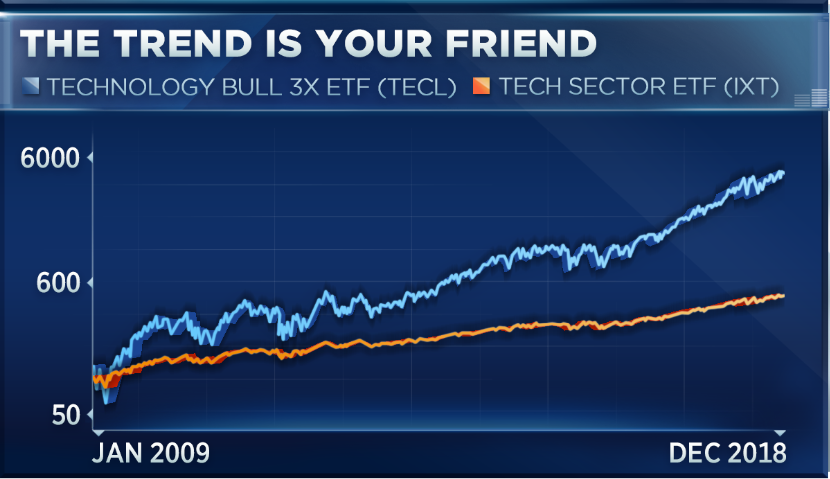
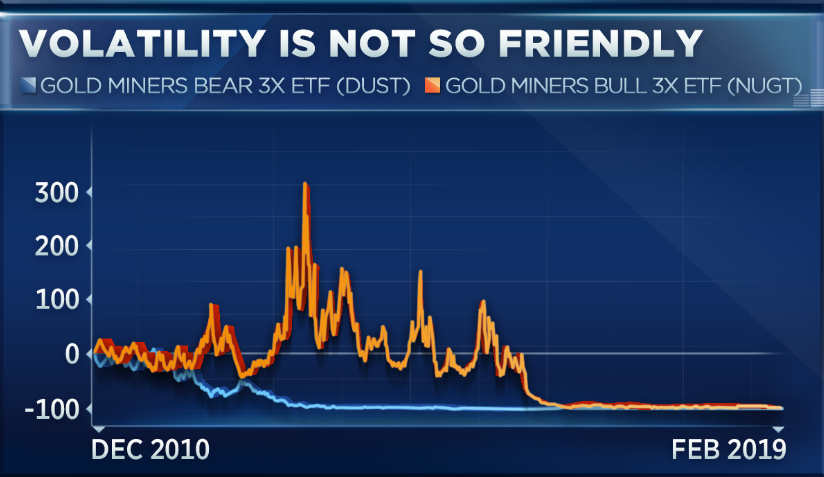
 How to triple your money in the S&P this year 3:19 PM ET Wed, 20 Feb 2019 | 06:43 Disclaimer

 Wall Street brokerages forecast that Chico’s FAS, Inc. (NYSE:CHS) will announce ($0.09) earnings per share for the current quarter, Zacks Investment Research reports. Three analysts have provided estimates for Chico’s FAS’s earnings. The highest EPS estimate is ($0.07) and the lowest is ($0.12). Chico’s FAS posted earnings per share of $0.11 during the same quarter last year, which suggests a negative year over year growth rate of 181.8%. The company is expected to issue its next quarterly earnings report before the market opens on Wednesday, March 6th.
 Shares of Oceaneering International (NYSE:OII) have been given a consensus recommendation of “Hold” by the eighteen ratings firms that are currently covering the company, Marketbeat Ratings reports. One equities research analyst has rated the stock with a sell rating, thirteen have assigned a hold rating and three have given a buy rating to the company. The average 1-year price target among brokerages that have updated their coverage on the stock in the last year is $22.75.
  BidaskClub upgraded shares of Village Super Market (NASDAQ:VLGEA) from a sell rating to a hold rating in a research report report published on Tuesday.


 Source: Flickr
  Source: Flickr
  Source: Public Domain Pictures
 Source: Flickr
 Source: Pixabay
  Source: Pixabay